Cashmere Beanies and Gift Sets: The Holiday Play Retailers Book in September
Oct 8,2026
Ask a room of buyers which piece in a cashmere range decides whether the season works, and most will name a sweater. The piece that actually decides it is usually the smallest one on the table. A beanie carries no size grading, no fit argument and almost no return risk, and it is the single easiest way for a customer to buy into the fibre — which is why the accessory line is where a cashmere programme is quietly won or lost every winter.
That dynamic is sharper in the gifting window. A hat is a considered present at a fraction of the commitment of a garment, it survives being wrapped without a size conversation, and it gets worn in public for months afterwards. The industry reading of the category for 2026 is consistent on this point: as hat manufacturers describe it, the beanie has been repositioned from a cold-weather necessity into a textural, luxury-facing accessory, with the softest yarns and the most deliberate detailing carrying the story. This guide sets out what a buyer should actually specify — silhouette by silhouette, spec by spec — and how to build the sets, colourways and calendar that turn accessories into a season-long programme rather than a November afterthought.
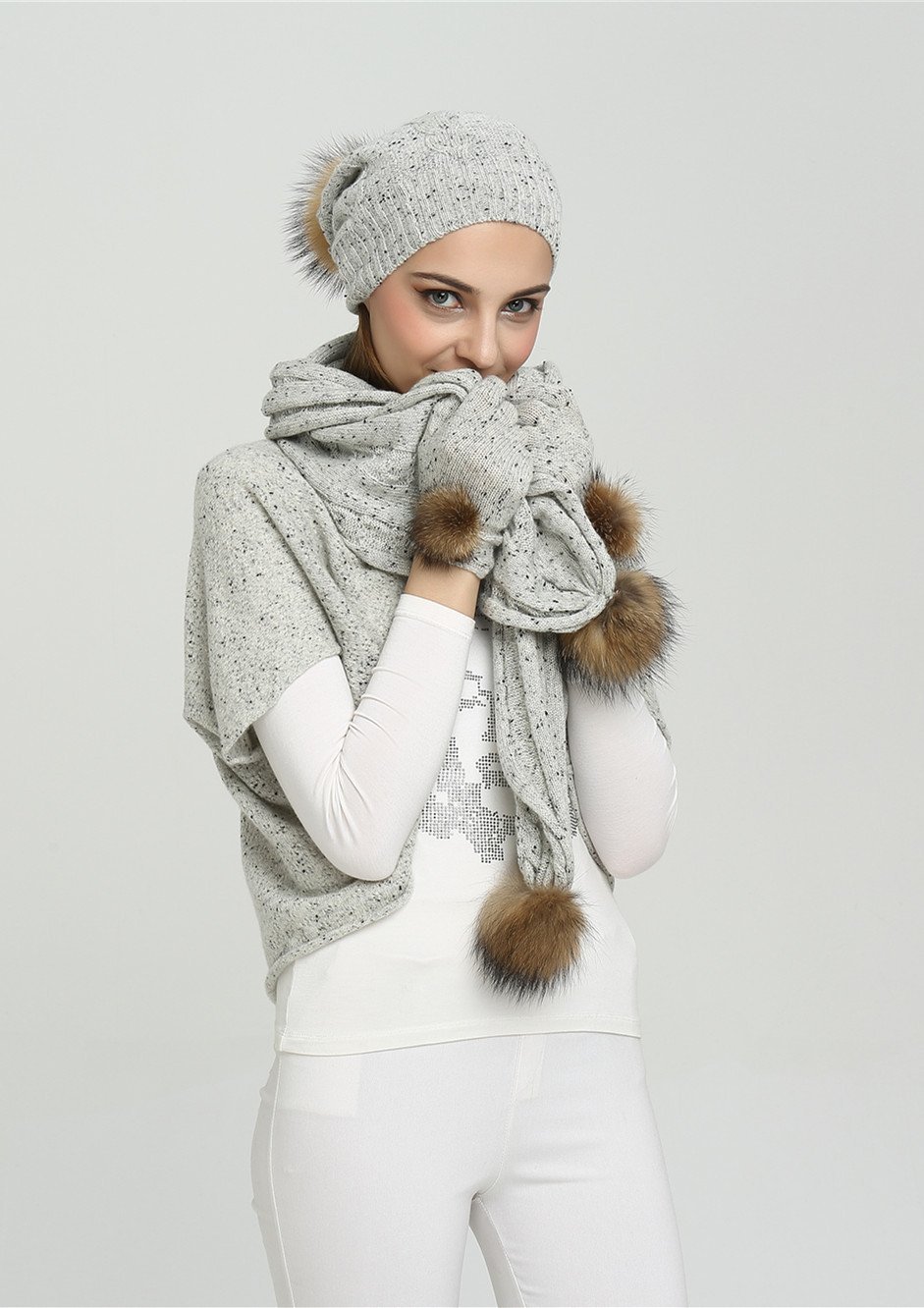
A three-piece set in a single speckle yarn, with fur pompoms carrying through the hat, scarf and gloves. Matched components are what turn a single accessory sale into a coordinated purchase.
1. Why the Accessory Line Decides the Season
Three structural facts make accessories disproportionately important, and none of them is about volume.
They remove the two risks that slow down garment orders. A knitted beanie is one size. There is no grade rule, no size curve to negotiate, no fit sample round and no size-driven returns tail. For a retailer testing a new cashmere supplier — or a new fibre claim — a hat is the lowest-friction way to place a first order and see how the yarn and the finishing behave. Accessory buyers who track such things put hats at the top of the list for exactly this reason: as one 2026 accessories review puts it, hats are the smartest starting point for adding the fibre to a wardrobe, and the difference in hand against wool or acrylic is obvious the moment it is worn.
They earn their place in the gifting window. Gift-oriented cashmere lists keep returning to the same handful of accessories — hat, glove, scarf, sock, throw — because they are universally sized, easy to wrap, and read as considered without requiring the buyer to know anything about the recipient's measurements. Across the 2026 gifting round-ups, the gift-boxed beanie and the plain knit hat resolve the sizing question entirely: presentation does much of the selling.
They reorder differently from garments. A sweater reorder is a decision about whether the yarn and the fit held. A beanie reorder is a decision about whether a customer came back for the second colour. That second purchase is what makes accessories valuable across a season, and it is why the fibre and colour controls in this guide matter more than the initial order.
There is also a merchandising effect worth planning for, visible in the cashmere category trend data on how accessory demand builds through the season. Hat, scarf and glove sit in the same gifting conversation, and a buyer who has already committed to a program will usually take the set rather than the single piece if the components are genuinely matched. That is the difference between an accessory line that contributes a few units and one that carries a visible share of the winter range.
2. What "Beanie" Now Covers: Seven Silhouettes, One Word
Most sourcing friction in this category starts as a vocabulary problem. "Beanie" is used for a 40-gram plain rib cap and for a ninety-gram cabled piece with a detachable fur pompom, and the two are not close relatives in construction, yarn consumption or finishing time. The 2026 market has widened the gap further, with textures, cables, brushed finishes and pompom detailing all being used to lift the beanie into the luxury accessory conversation — a direction that tracks the wider autumn/winter 2026 move towards cashmere as an everyday layering fibre. Settle the silhouette before the sample request and you save a development cycle.
Silhouette
Construction signature
Buying note
Plain rib, shallow cuff
1×1 or 2×2 rib, 4–5 cm turn-back
The volume piece. Fastest to knit, easiest to repeat, carries the core colourway
Deep cuff / fold-back
8–10 cm turn-back band, often a denser rib
Reads as the more considered piece; the extra yarn and finishing are visible
Slouchy, long crown
Extended crown length, worn sitting back off the forehead
Younger, streetwear-leaning customer; check crown length on a head rather than flat
Pompom
Fur, faux fur or knit pom, fixed or detachable, ribbed body beneath
The gifting statement. Fixation method drives both safety and the complaint rate
Cable and textured
Cable, waffle, honeycomb or ruffled surface structures
Materially more yarn per piece and slower to knit; value the structure, not the style name
Lined and double-layer
Inner band or full second layer in a fine knit
Aimed at genuinely cold markets; adds weight, warmth and a second knitting operation
Shaped: ear, animal, kids
Shaped crown panels, appliqué or knitted ears, embroidery or intarsia face
Family and kids tier; shaping changes the pattern and the pressing routine
Two adjacent products sit just outside the list and are worth holding in the same conversation. The balaclava merges hat, earmuffs and neck coverage into one knitted piece and has moved from technical outerwear into everyday city dressing, which makes it a natural add-on for a programme that already runs a beanie. The knitted cap and the ribbed beret are the dressed-up alternatives for customers who find a standard beanie too casual, and both appear consistently in the best-selling winter hat data for the season.
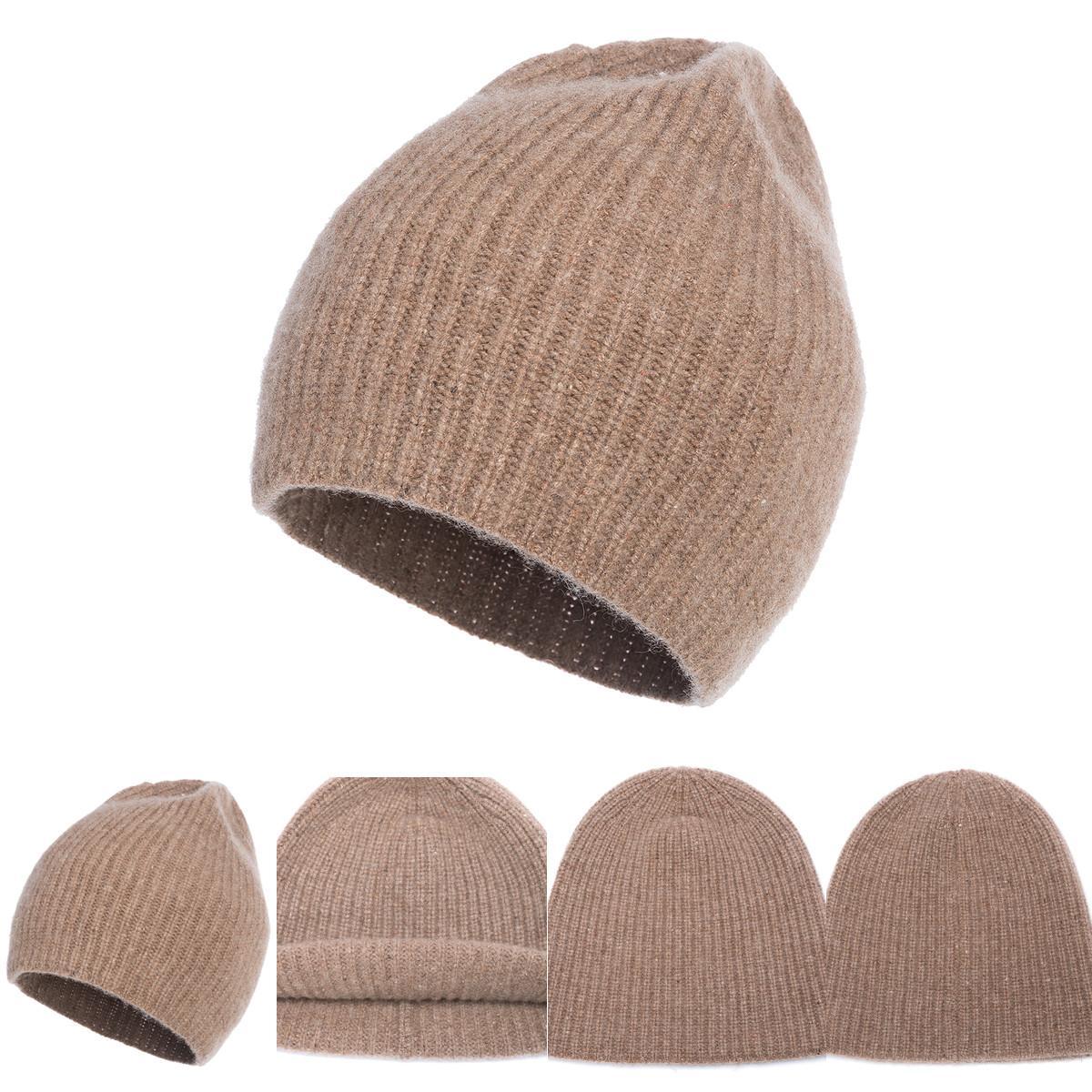
A ribbed crown photographed from five angles. Ask for this sheet — crown shaping, cuff depth and the inner finish are the three things a single front shot will not show you.
Where a pompom or a fur trim is involved, the fixation method belongs on the specification rather than in a conversation. A pompom that is sewn and separately tacked behaves differently from one mounted on a snap or a press stud, and the detachable version changes the care instructions and the washing route for the whole piece.
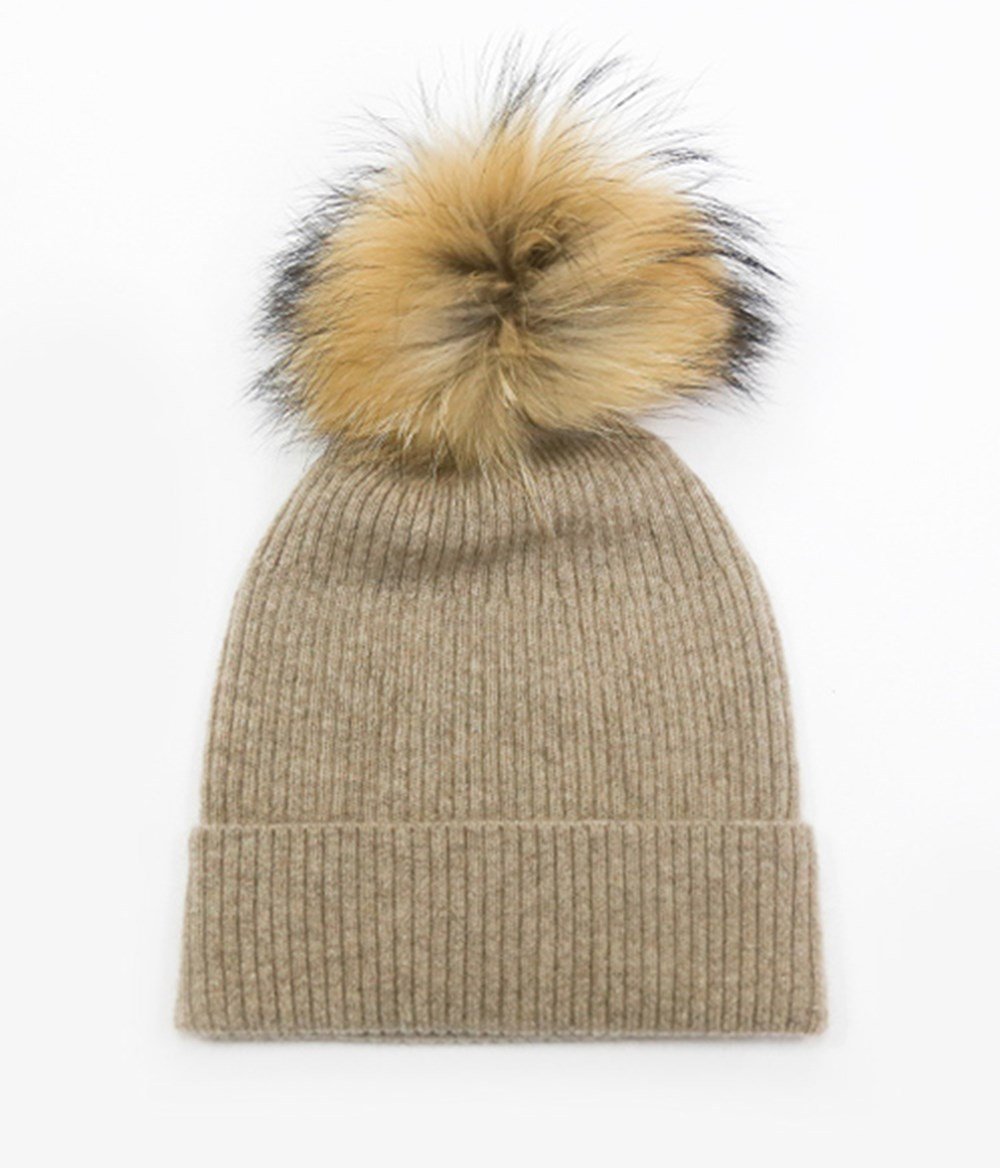
A fur pompom on a ribbed crown. Ask which fixation is quoted — sewn, tacked, or snap-mounted — because it changes both the care label and the return profile.
3. The Specification Sheet for a Cashmere Beanie
An accessory order that goes wrong is almost never a design failure. It is a specification that was never written down, so nobody could check it. These are the lines worth filling in before the first sample is knitted. You can read across our own pure cashmere beanie range against this structure.
Specification
What to write down
Why the buyer should care
Fibre and micron
Fibre content stated exactly; measured mean micron value for the batch
Drives hand and pilling behaviour. A measured number, not a descriptive word
Yarn count and ply
e.g. 2/26 or 2/28, plied rather than single
Determines how the piece behaves after washing and how long the rib holds
Gauge
3gg / 5gg / 7gg / 12gg
Sets crown weight, drape and how fine the surface reads at arm's length
Crown construction
Seamless (knitted to shape) or cut-and-sew with a linked seam
A seamless crown has no join to sit on the forehead and behaves under a hood
Cuff depth
Finished turn-back depth in centimetres
Affects the silhouette and how much of the cuff is available to pull down
Finished weight
Piece weight with a stated tolerance
The only reliable proxy for warmth band, and the first thing that slips on a reorder
Pompom fixation
Sewn and tacked, snap-mounted, or detachable
Drives the care instruction, the washing route and the complaint risk
Colour and fastness
Reference with batch-match tolerance; wash and rub fastness results
Turns "a slightly different grey" into a number both sides can check
Finishing route
Fulled or non-fulled; brushing; hand-linked toe and trim details where used
Fulling changes the surface and the shrinkage behaviour; it must be named, not assumed
Two of those lines carry more weight than their length suggests. Finished weight is the clearest early warning of a yarn reduction: a crown that was 68 grams and arrives at 57 will feel thinner in the hand long before anybody measures it, so put a tolerance on the sheet and check the bulk against the retained sample. Colour fastness and fulling are the other pair — a beanie is washed more often than a sweater, and a non-fulled knit that was never tested will show it.
Brushed and fulled surfaces photograph beautifully and hide a great deal. Put fulling and brushing on the specification, then verify on the bulk rather than the sample.
A one-page spec beats a long email. Fibre and micron, yarn count, gauge, crown construction, cuff depth, finished weight with tolerance, pompom fixation, colour reference with tolerance, finishing route. Nine lines, and between them they cover every accessory dispute that is worth avoiding.
4. Gift Sets: Composition, Colourways and the Parts That Get Forgotten
A set is not three pieces sold together. It is a single purchase decision with one presentation and one colour promise, and the components have to agree on all three. The composition question comes first.
Two-piece. Hat and glove, or hat and scarf. The hat-and-glove pairing is the most compact to pack, while hat and scarf reads more generous and covers the neck — both are standard compositions in the cashmere glove and scarf sets that dominate gifting listings.
Three-piece. Hat, scarf and glove in one yarn and one colourway. This is the composition most gifting buyers anchor on, and the one where the components must genuinely match.
Four-piece and themed. Adding a fourth element — bed socks, a knitted pouch, a contrasting band — turns the set into a themed box, which is where holiday-specific patterns and jacquard detailing belong.
The colour promise is where sets fail. Hat, scarf and glove are knitted from different yarn lots even when the colour name is identical, and a scarf is a much longer piece than a glove, so any variation in dye lot shows up across the set before it shows up on a single piece. Ask for the set to be knitted from one dye lot and specify a colour tolerance across all components, not per piece. If the set is a three-piece in a pale neutral, put the matched lot in writing and check it on a full set in daylight rather than on swatches under factory lighting.
Then there is the part that gets forgotten until the last minute: the packaging. A gift-ready set is a different product from the same three pieces in a polybag, and the packaging has its own lead time. Decide early whether you are shipping a printed box, a band, a hangtag, a pouch or a combination, and whether the customer-facing copy needs to be printed on the box or applied as a label — because box artwork and printing can run to several weeks that are easy to lose in the middle of a production window.
Two more set decisions are worth settling at the sample stage. First, whether the components are packed as a set or as separate SKUs that your customer can break — a set box is harder to replenish a single piece into, while separate SKUs protect you when one component sells ahead of the others. Second, whether the set carries a single barcode or one per piece, which is a decision your retail partner will have an opinion about. Our cashmere accessories range includes both hat-and-scarf sets and single pieces, so the pack structure can be chosen per customer.
5. Colour, Texture and the Buy Calendar
Colour architecture in accessories is narrower than in garments and moves faster. Neutrals — camel, charcoal, oatmeal, navy, chocolate, soft white — carry the programme and repeat season after season, while one or two accent colours per drop create the reason for a customer to come back. The 2026 direction on this is well documented: the neutral beanie styled with outerwear is the reliable seller, while the seasonal pattern, jacquard and animal-detail pieces are what pull a line into the gift conversation, and the 2026 knitwear trend reporting tracks the same pattern across the wider accessory category. A workable split is roughly three quarters neutral, one quarter accent, with the accent concentrated in the shapes that photograph best.
Texture deserves its own line in the plan, because texture is what separates a beanie that looks like an accessory from one that looks like a basic. A rib, a cable, a brushed surface and an intarsia or embroidered motif all photograph differently and sell to different customers, and each one changes the yarn consumption and the knitting time. Choose two or three structures for the season and repeat them across colours rather than introducing a new structure for every colourway.
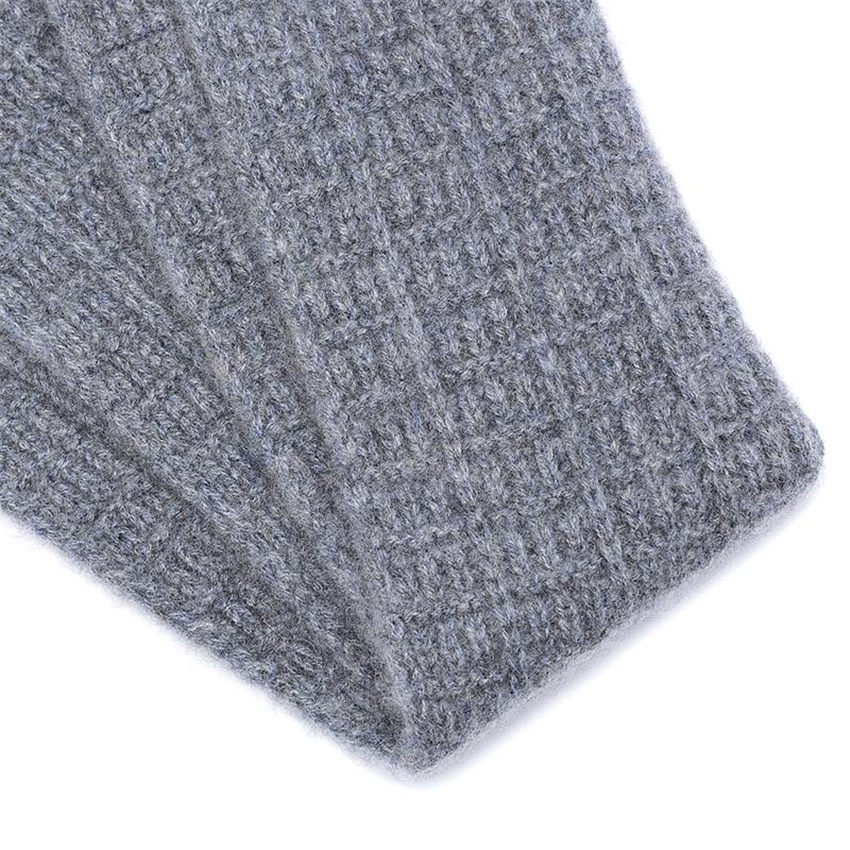
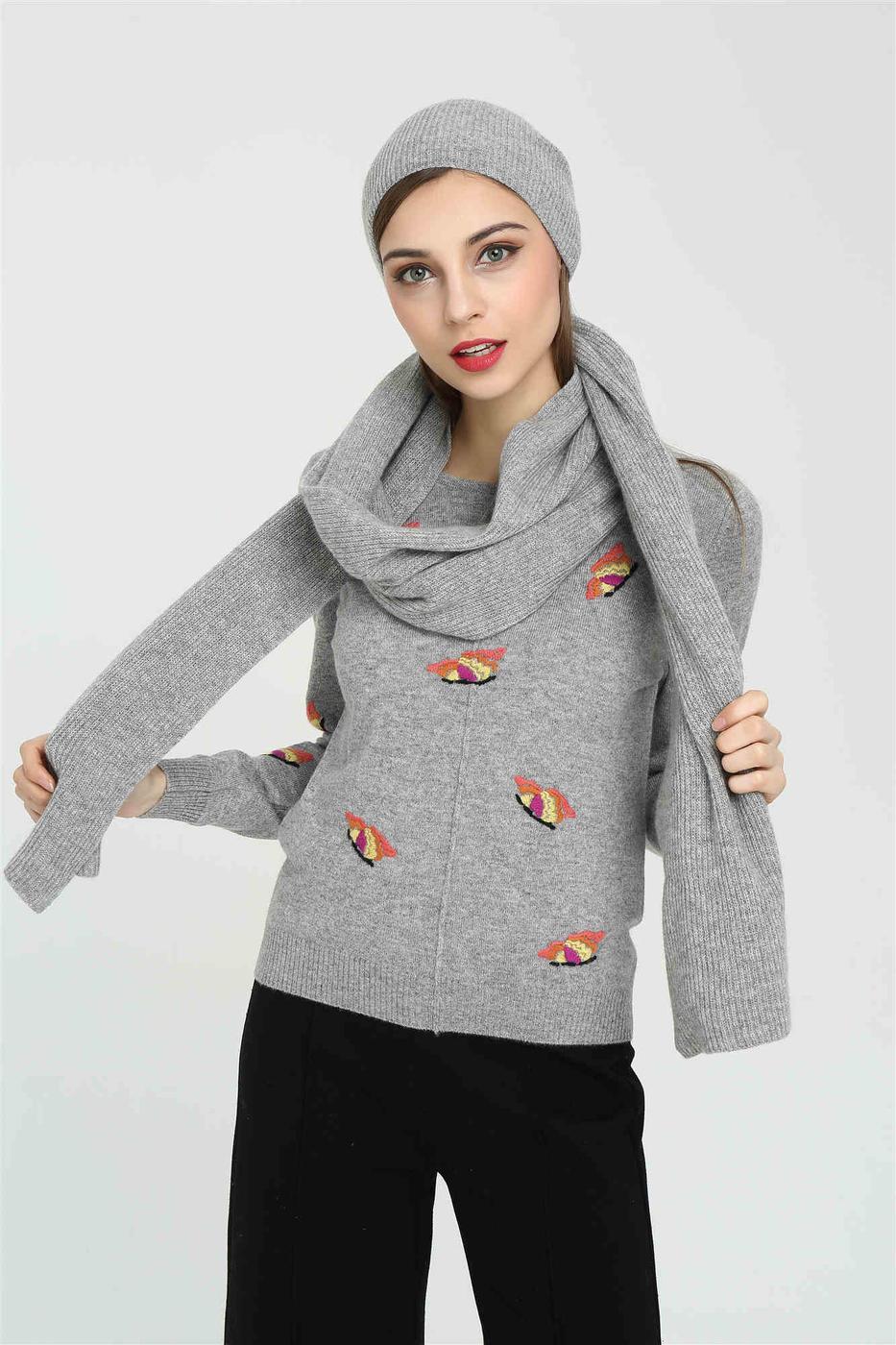
A neutral beanie and a long scarf in the same grey. Neutrals carry the programme; the structure and the styling are what make them photograph as part of a collection.
The calendar is where accessory programmes are most often lost, because the piece is small and everything about it feels last-minute. In practice a holiday beanie is decided on yarn and colour months before it reaches a shelf.
Design lock. Silhouettes, structures, colourways and the set compositions confirmed — including which sets are boxed and what the artwork says.
Yarn booking. Fibre and colour reserved against the confirmed knit quantities. Dyed yarn is the long pole in an accessory programme, and a colour that is popular in one silhouette will pull ahead of the others.
Sampling and approval. Construction, gauge, finished weight, colour across the full set, and the packaging artwork approved together rather than in sequence.
Bulk and dispatch. Knitting, finishing, labelling and the packaging operation, working backwards from the delivery date your retail partner has given you.
Certification sits alongside the calendar rather than after it, because traceability and chemical-safety documents are held by the production site and cannot be invented at the shipping stage. If your programme carries a fibre-sourcing or traceability claim such as The Good Cashmere Standard, or finished-textile chemical safety testing under OEKO-TEX Standard 100, confirm which facility is covered and that your order will actually be made there. Labelling obligations follow the same logic: under the US wool and cashmere labelling rules, fibre content and origin have to be stated accurately, and the wording on the label is a compliance decision rather than a marketing one.
6. Kids and Family: The Tier Most Programmes Skip
Children's cashmere accessories are the least crowded part of the category and the most straightforward place to test a new silhouette, because the piece is small, the yarn requirement is modest and the customer is buying for someone else. The 2026 direction in this tier is shaping and character: animal crowns, knitted ears, embroidered or intarsia faces, and striped colourways — the same texture-and-detail logic running through the broader knitwear category data. All of them change the knitting pattern and the pressing routine, so they belong in the same spec conversation as the adult shapes.
Three points need deciding in writing before the sample is approved. Sized bands matter more than the style name, since a kids beanie is really three products — check the age bands on the spec. Detachable pompoms and small fixed embellishments should be reviewed with the age band in mind, and anything that could be pulled free should be tension-tested rather than assumed. And if the family set is the goal, build it from one yarn lot so that the adult and child pieces photograph as a set rather than as two products that happen to share a colour name.
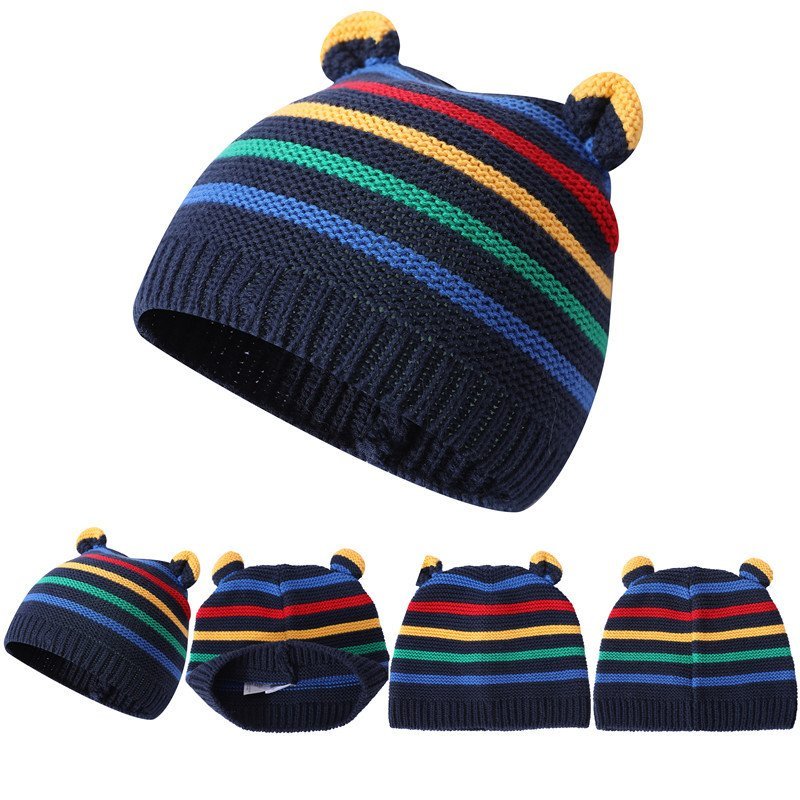
A shaped kids crown with knitted ears, from five angles. Shaping, ear attachment and trim tension all need to be checked on the piece rather than on the flat swatch.
7. Wholesale Cashmere Beanie and Gift Set FAQ
What should the micron value be on a wholesale cashmere beanie?
Ask for a measured mean micron value for the batch rather than a descriptive grade, and hold it on the specification sheet. Beanies sit against the forehead and the ears where the fibre is felt most directly, so the difference between a fine and a coarser lot is more obvious here than in a garment. The practical control is that the value you approve on the sample is the value stated for the bulk, and that fibre content and origin are labelled accurately.
Should a pompom be detachable?
Decide it on the customer and the care route rather than on appearance. A detachable pompom simplifies washing and lets a customer restyle the piece, but it introduces a fixation point that has to be tension-tested and described precisely in the care instructions. A permanently sewn and tacked pompom is the lower-risk option for younger age bands. Whichever you choose, name the fixation method on the specification — sewn, tacked, or snap-mounted — because it is the detail that generates both the returns and the complaints.
How do I keep the components of a gift set colour-matched?
Specify that the set is knitted from a single dye lot and set a colour tolerance that applies across all components rather than per piece. Hat, scarf and glove are different knitted structures with different surface areas, so a lot variation that would pass on a single piece becomes visible once the pieces sit together in a box. Approve the full set in daylight — not individual swatches under factory lighting — and retain one complete set as the golden sample for the reorder.
What is the difference between a seamless and a cut-and-sew crown?
A seamless crown is knitted to shape, so there is no join running across the head, and the piece behaves better under a hood or a helmet. A cut-and-sew crown is knitted as a panel, cut and joined, which gives more freedom in shaping and panel construction. Turn a sample inside out and run a hand across the crown and the neck opening: a seamless piece reads as a continuous knitted loop, while a cut-and-sew piece shows a linking seam. Put the named construction on the sheet and verify it on the golden sample.
How do I stop a beanie losing its shape after washing?
Four controls do most of the work: a plied rather than single yarn, a stated finished weight with a tolerance, a finishing route that names whether the piece is fulled or not, and a care label written for that specific construction rather than copied across a mixed range. A rib that goes slack after the first wash is usually a yarn and finishing question rather than a laundering one, so resolve it on the specification before the bulk goes into production.