100 Cashmere Sweaters: What a Factory Must Prove on Purity and Labels
Nov 5,2026
No claim on a knitwear label travels further than 100% cashmere, and no claim is tested less often at the moment it matters. Buyers read the rail, squeeze a sleeve, and write the order. The label, meanwhile, is a legal statement — in the United States the word cashmere is defined by federal rule down to the micron, and a garment that fails the definition is mislabelled no matter how it feels.
This guide is written from the factory side of that label. It covers what the claim actually requires in law, why hand-feel screening cannot confirm it, which documents a mill must be able to produce, how the five most common claim wordings differ, and where purity is won or lost between fleece and finished sweater. The production examples come from a cashmere factory that tests as well as knits, because a claim is only as good as the paper behind it.
What “100% cashmere” means in law
The definition is precise. Under the US federal rule at 16 CFR 300.19, fibre may be called cashmere only if it is the fine (dehaired) undercoat produced by the cashmere goat Capra hircus laniger, the average fibre diameter does not exceed 19 microns, and no more than 3 percent of the fibre by weight has fibres averaging over 30 microns. The coefficient of variation around that mean may not exceed 24 percent. Three numbers, all measurable in a laboratory.
The industry definition mirrors the legal one. The Cashmere and Camel Hair Manufacturers Institute definition, as recorded by ICAR, adds the measurement reference — IWTO Test Method 8, the projection-microscopy technique for mean fibre diameter. In other words, the word on the care label commits a garment to a specific fibre from a specific animal, measured by a specific method. There is no official A, B or C grading system layered on top: “Grade A” cashmere is a retail convention, not a standard, and some fibres sold under the lower grades would not meet the 19-micron ceiling at all.
Two related wordings carry their own rules. Under the same US labelling rules, the terms virgin and new may only be used when the product is composed wholly of fibre that has never been reclaimed from a manufactured or used product — which is why recycled fibre must be disclosed, not hidden behind the word cashmere. And an ornamentation exclusion exists for decorative trims, so a garment whose ruffle or border is not cashmere can still carry a truthful main-body claim, provided the exclusion is stated.
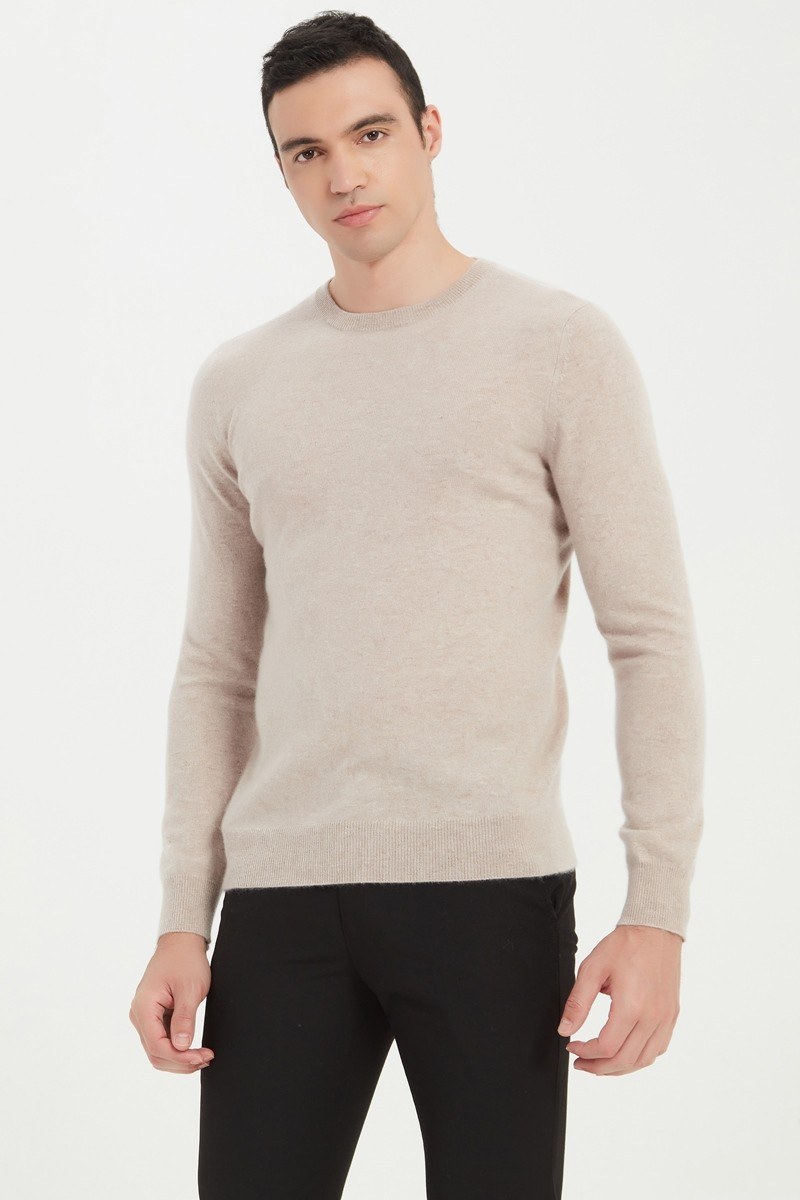
A plain-gauge crew neck — the purest expression of the claim, and the style where a substitute fibre is hardest to spot by eye.
Why the label cannot be checked by hand
Every buyer has a field test, and every field test has the same blind spot. Cashmere and sheep’s wool are both keratin, so a burn test returns the same smell, the same ash and the same false pass on both. A wrist test cannot separate 18-micron merino from 16-micron cashmere, because at those diameters the nerve endings in skin stop registering the difference. Stretch, recovery and sheen are all influenced by spinning and finishing, not just fibre species. As one buyer’s guide to what cashmere actually is makes clear, the fleece itself is a dual coat — fine down plus coarse guard hair, with the down often a fifth of the raw mass — so even a genuinely “goaty” handle says nothing about how well it was dehaired, or about what else is in the yarn.
The species-level distinction lives at the scale pattern. Cashmere fibres carry fine, closely spaced cuticle scales with smooth, even edges; wool scales sit higher and edge more sharply. Light microscopy reads that pattern fibre by fibre and reports composition by mass; scanning electron microscopy resolves it further for tight blends and disputed samples. This is the work behind a credible 100 cashmere sweater claim, and no showroom shortcut replaces it.
Stitch definition tells you about the knitting; only microscopy tells you about the species.
The report package a factory must hand over
A purity claim is auditable only if the paperwork chain is unbroken from raw fibre to finished garment. Five documents do most of the work, and it is worth agreeing on them before the first deposit rather than after the first dispute. A separate sourcing guide for large knit goods makes the same point from the buyer’s chair: never rely on an invoice statement for a premium fibre claim — ask for the yarn specification, the percentages, the country of origin and the laboratory report, and check that the label and the product page use identical wording.
Cashmere vs non-cashmere content by mass, on the named method
Fineness distribution or fibre length
Fibre diameter report (projection microscopy or OFDA)
Mean diameter, coefficient of variation, share over 30 microns
Species composition
Yarn lot traceability sheet
Which spinning lots fed which dye and knitting batch
How the fibre itself was tested at origin
Laboratory accreditation (ISO/IEC 17025 scope)
Competence of the lab that signed the numbers
That your sample represented the whole lot
Label artwork proof, approved before plates are made
What the market will actually read
What is inside the polybag
The diameter report deserves special attention because it is the half of the purity claim buyers forget. A composition report can show 100 percent cashmere by species and still pass a fibre whose mean diameter breaches 19 microns — which fails the US definition on a different axis. Ask for both numbers, every time.
Five claims on one rail: the wording table
Retail ranges rarely contain just one claim. A full cashmere collection will typically mix pure items, blends and recycled lines on the same floor, and each wording carries its own obligation. The table below maps the five most common claims against what the US rules demand, with the practical watch-out for each.
Claim
What it legally requires
Watch-out
“100% cashmere”
All fibre meets the 16 CFR 300.19 definition; measured per lot
The ornamentation exclusion must be stated if trims differ
“Pure cashmere”
Same as 100% — “pure” adds no separate standard
Do not use “pure” wording on any blend
“70% cashmere / 30% wool”
Percentages stated; the cashmere portion must meet the definition
Generic “wool” is fine; named wools (lambs, merino) carry their own expectations
“60% recycled cashmere”
The word “recycled” qualifies the fibre wherever it is named
Recycled fibre may never be described as virgin or new
“Cashmere feel” / “cashmere touch”
Fibre words implying presence must match the required disclosure
Suggestive wording on hangtags or embroidery is the most common self-inflicted breach
Solid undyed colourways photograph and test well — dark and multicolour lots need the same discipline with more attention to sample selection.
Where blends earn their place — and how to word them
Purity is not a ranking of virtue; it is one specification among several, and honest cashmere blend percentage wording is what lets a range carry both. A 30 percent wool addition stabilises the yarn for high-wear styles and holds shape through more wash cycles; a silk blend adds drape and sheen for wraps and fine-gauge shawls; a small nylon content earns its keep in socks and slippers, where pure cashmere would wear through at the heel within a season. What the blend must never do is borrow the vocabulary of purity it has not paid for.
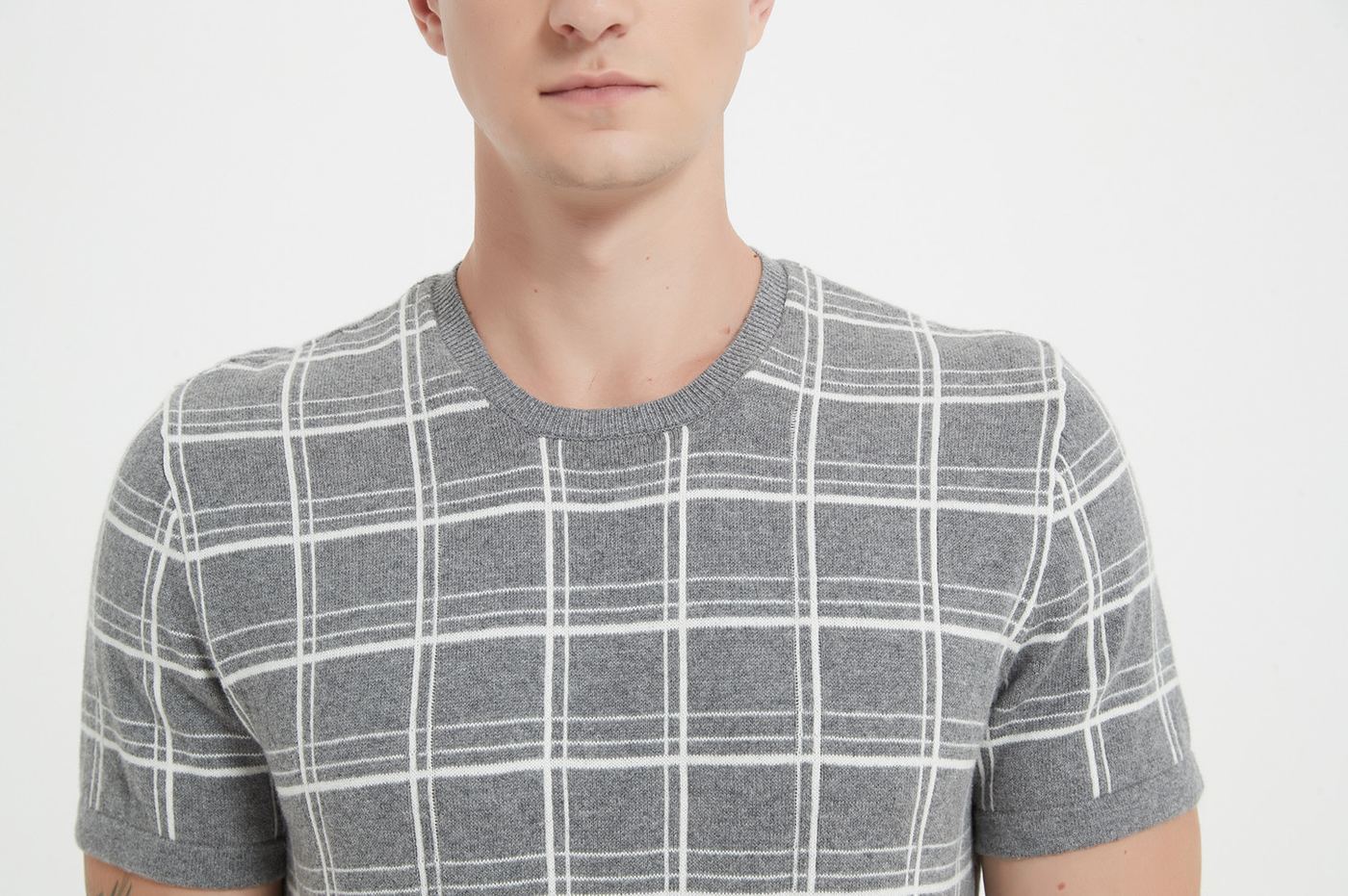
The colourwork in men’s cashmere sweaters shows the practical version: an intarsia panel that switches between two yarns is still one garment with one label, so the composition report must sample across the panel boundary, not beside it. Decorative components follow the ornamentation exclusion — accessories with mixed trims are labelled on the same logic, component by component.
Where purity is won or lost in the chain
Most impurity events are not fraud; they are housekeeping. The classic cases repeat across every producing region: shared carding lines where wool runs the shift before cashmere, dark fibres migrating into white lots from an insufficiently cleaned line, a substitution at the top-making stage that nobody flags because the yarn still feels right. A cardigan programme that passes its sampling round on one yarn lot can fail its bulk on another, which is why the traceability sheet matters as much as the first test.
Per lot, not per season. Test the composition and diameter of every spinning lot that enters the programme; a season-level certificate covers nothing that arrived after it.
Sample across the batch. Pull composition samples from finished, dyed garments at random — dyeing and finishing can shift surface characteristics that microscopy relies on.
Name the arbitration lab in the contract. Inter-laboratory variance on mean fibre diameter is a known reality; specifying the referee lab and its tolerance in advance turns a dispute into a procedure.
Keep claims and welfare stories separate. A fibre-side standard such as the Good Cashmere Standard speaks to animal welfare and farm management — a different axis from composition, and one that should be worded as such on the label.
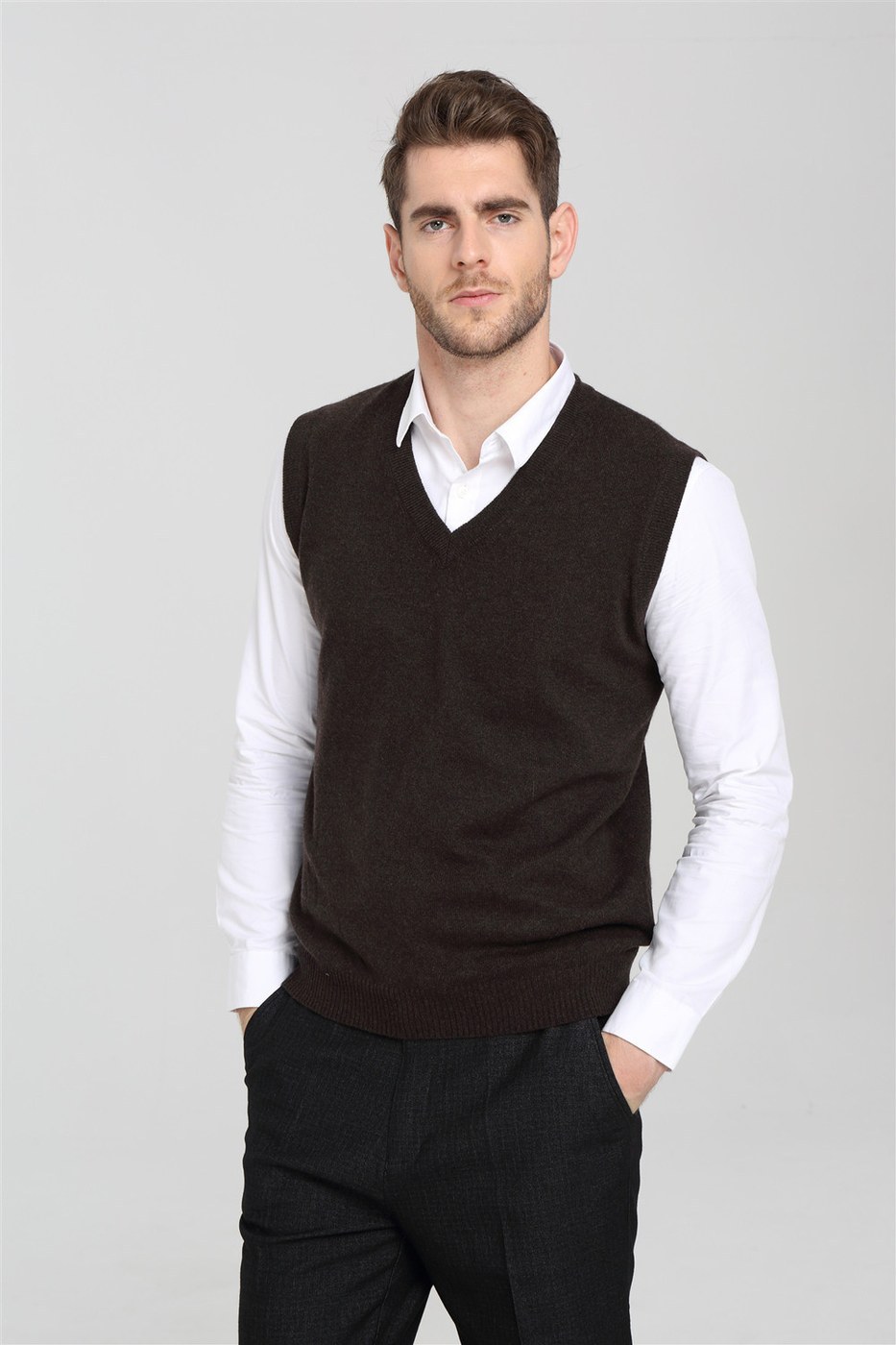
Layering pieces pass through the most hands between knitting and packing — chain checks belong here most of all.
A pre-order checklist for the purity claim
Six agreements, written into the purchase order before the deposit, remove almost every purity argument a programme can generate. They take one meeting to settle:
Name the methods. Composition by species-level microscopy; diameter by projection microscopy or OFDA; state both standards on the document.
Fix the numbers. Mean diameter target with a rejection ceiling, the CV limit, and the share permitted over 30 microns — the legal thresholds are the floor, not the specification.
Name the referee lab and the inter-lab tolerance that applies when origin and destination results disagree.
Test per yarn lot and re-test composition on bulk, dyed garments before packing.
Review the label artwork against the US rules and the destination market’s equivalent — EU labelling obligations are summarised well in this EU, UK and US labelling comparison — before printing plates are cut.
Align marketing language. Hangtags, embroidery and product pages may not imply cashmere anywhere the required disclosure does not state it.
Half-zips and zip-front styles carry more sewn-in components — trims, tapes and zips that the ornamentation wording must account for.
Garments that make claims about finish rather than fibre — washability, for instance — follow the same discipline on a different axis: the finish claim needs its own test protocol, exactly as a machine-washable knit carries wash-test evidence alongside its composition report. Weight claims follow the same logic on light pieces such as a fine-gauge scarf or the featherweight knits in the home-textile range: gramme weight per square metre, measured, not estimated.
If you are building a range whose labels must survive both the customs officer and the return counter, it is worth reviewing the claim wording with the people who will have to prove it. Contact us to talk through composition testing, label artwork and lot-level traceability for your next programme — and for the definition-side basics, the buyer FAQ covers the vocabulary in short form. The classics hold their position for a reason: a pure cashmere crew neck earns its rail position on paper before it earns it on the hanger.
FAQ
Is “pure cashmere” stronger than “100% cashmere”?
No. Under the US rules both require the same thing: every fibre in the garment meets the cashmere definition. “Pure” is a styling word, not a higher tier — and it must not appear on any blend.
Can I verify purity without a laboratory?
Not to the standard the label promises. Touch tests cannot separate cashmere from superfine wool, and a burn test identifies keratin, not species. Only species-level microscopy — or DNA and protein-based methods for disputed samples — distinguishes cashmere from lookalike fibre.
What tolerance applies when a composition test disagrees with the label?
Conventions differ by market. The EU regulation tolerates purely accidental fibre presence up to 2 percent by weight where it results from manufacturing rather than deliberate blending; many trade contracts specify a measurement variance of around 3 percent for microscopy-based composition. Deliberate blending is never covered by any tolerance.
Does recycled cashmere have to be labelled “recycled”?
Yes. Where the fibre is recycled as defined by the US rules, the word “recycled” must qualify the term cashmere wherever the fibre is named — and reclaimed fibre may never be described as virgin or new.
How often should a programme re-test its fibre?
Per yarn lot, every time a new lot enters the programme — plus one bulk-stage composition check on dyed garments before packing. A certificate from last season describes last season’s yarn.