

Christmas Cashmere Sweaters: A Factory Guide to Gifting Ranges
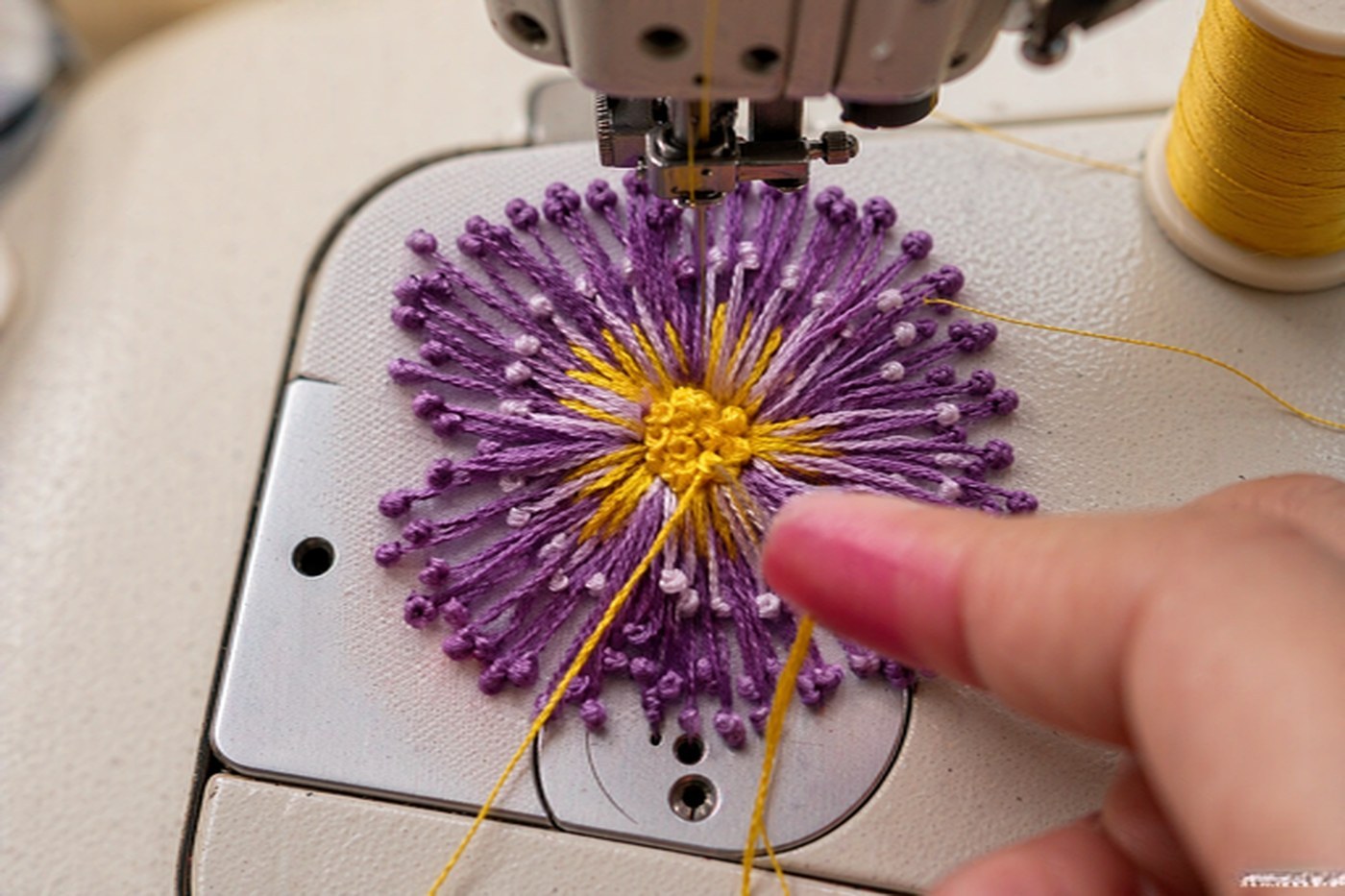
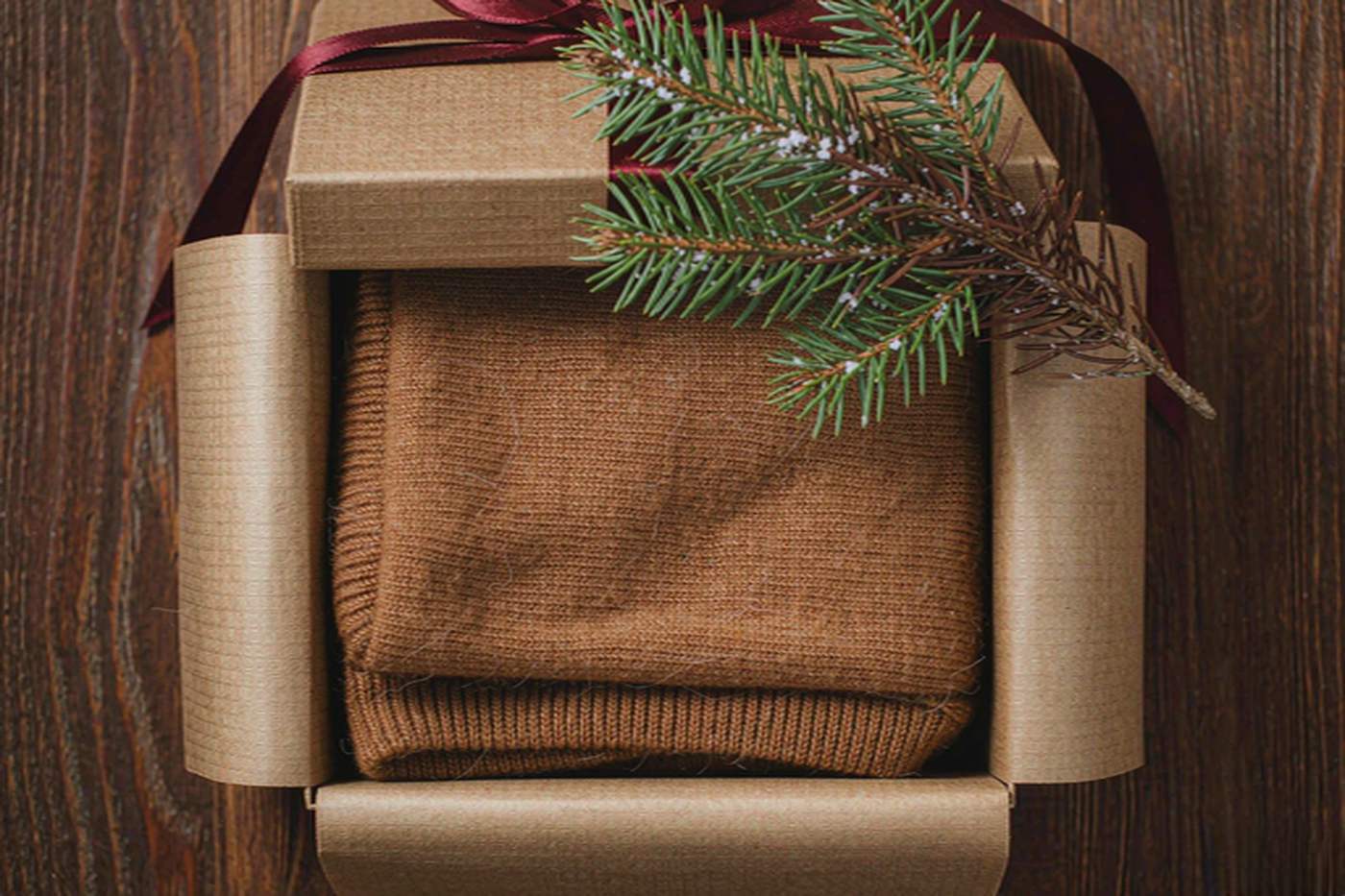
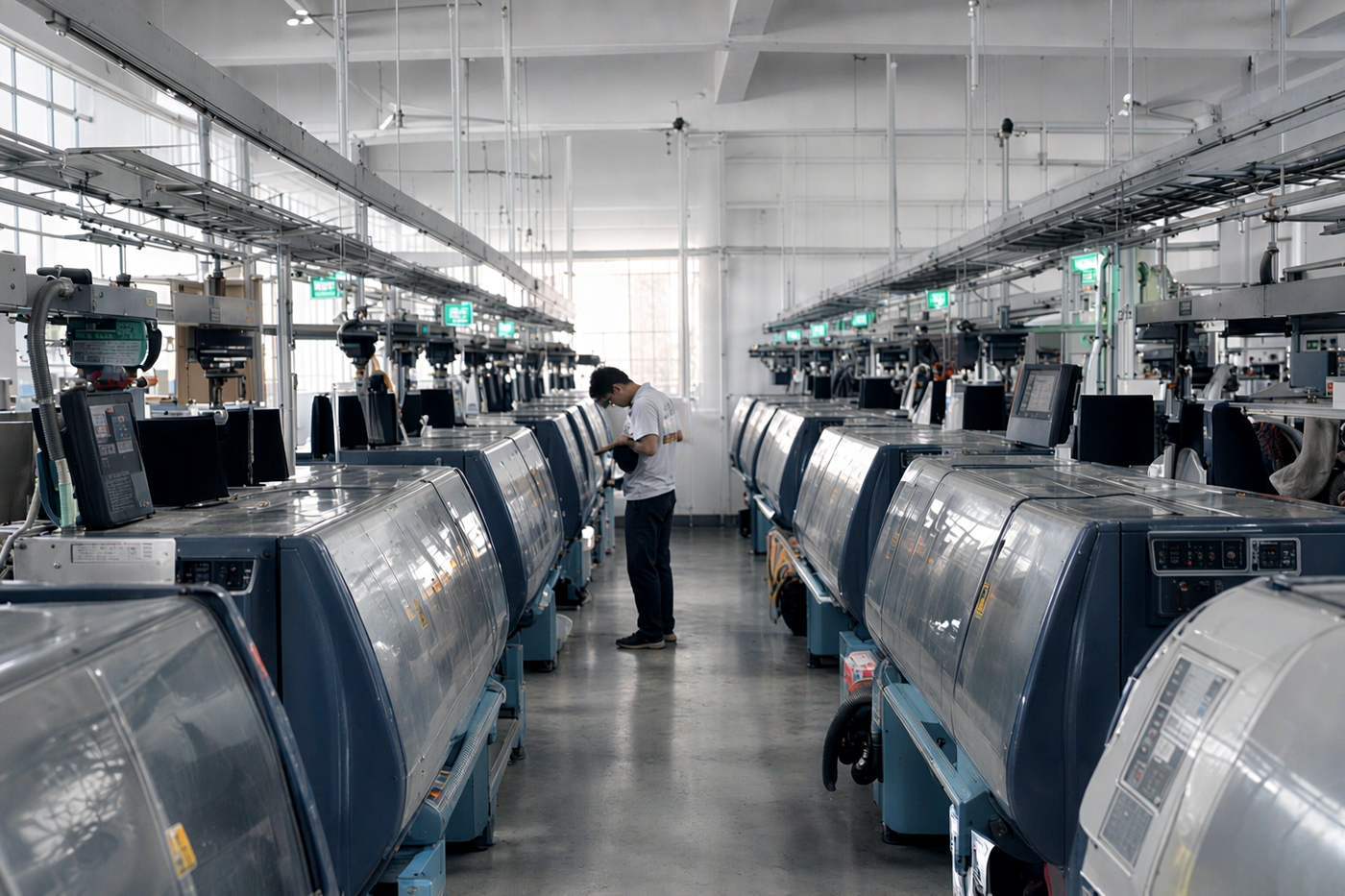
When retailers brief a Christmas capsule, the conversation usually starts with one word — “festive” — and that word hides at least four different products. A programme can mean subtle holiday knits in seasonal tones that sell from November into February. It can mean graphic holiday jumpers with knitted-in motifs that peak in the three weeks before Christmas. It can mean corporate gift ranges, where one or two styles are bought in volume and handed to teams or clients. Or it can mean family matching sets, a category that keeps growing because it photographs well and renews itself every year. The four products share a fibre and a season, but they demand different depth of pattern work, different packaging and, above all, different calendars. Cashmere changes the economics of that range. Because the fibre is premium, buyers rarely gamble on a novelty silhouette in a full cashmere body; the safer structure is a classic crew, V-neck, half-zip or rollneck carrying the seasonal story through colour, a knitted motif, or the packaging. Trade press confirms the direction: winter 2026–27 cashmere collections and their Christmas gifting angle lean on tone, craftsmanship and durability rather than loud novelty, and heritage houses built entire holiday campaigns around cable crews, rollnecks and brushed finishes. That is the register a factory-made festive capsule should aim at: seasonal without being disposable. A look across the men’s cashmere sweater range shows how far a classic crew carries a seasonal palette before any motif is needed. The first planning decision is therefore range architecture, not design. A tight palette of four to six colourways knitted across three or four body shapes lets yarn be bought once and split across styles, keeps every colour inside one dye plan, and gives the retailer a coherent shelf story — the way the site’s own 2026 collection hub groups body shapes against a shared colour story is a useful reference architecture. Gift-guide edits in the trade press show what actually gets listed: jacquard crews, Fair Isle pullovers, bobble knits, argyle with festive detailing, and quiet cable knits positioned as “the Christmas jumper for people who do not want a loud one”. Every one of those is a classic body carrying a seasonal treatment — exactly the structure a cashmere programme should copy. Colour drives a Christmas programme harder than any other variable, and it is also where the fibre type bites. Cashmere takes deep, saturated shades beautifully — burgundy, forest, claret, pine — but every extra shade is a separate dye lot at the mill, and a dye lot has a minimum weight. On a four-colour palette across three body shapes, colour count and yarn volume must be planned together, because the smallest colourway in the matrix still has to carry its own lot. Buyers who add a fifth “nice to have” shade late in September routinely discover that the shade resets the yarn calendar. The professional sequence is lab dip, then hand-feel and shade approval on the actual cashmere base, then lock. Shade on cashmere also reads differently under retail lighting than under studio light — deep reds in particular can look almost black on camera, which matters for a programme whose whole sales window is four photograph-driven weeks. Experienced buyers approve shades against the swatch, not the screen, and keep one approved lab dip per shade as the referee document. A mill that resists issuing those approvals is a mill that plans to re-dye mid-programme. One more discipline belongs here: fastness. Holiday knits meet perfume, mulled wine, log fires and radiators; rub and wash fastness on deep shades should be tested on the dyed base before bulk, not discovered in customer returns. The finishing route matters too — a programme with documented pilling and fibre-content testing survives January reviews far better than one that shipped on faith. Pairing the knits with cashmere scarves on the same four-shade palette extends the gift story without opening a second dye plan. A seasonal motif in cashmere can be produced three ways, and the wrong choice adds weeks. Jacquard knits the pattern into the structure with multiple yarn feeds — the method for all-over Fair Isle style patterning. Intarsia lays in blocks of colour for large, clean graphics. Embroidery adds motifs after knitting, on the finished panel or garment. Each route carries different development time, different machine time and different risk on a fibre as fine as cashmere. Jacquard is the most demanding. Multi-colour patterns require a pattern grid programmed for the exact gauge, and the hidden side of the work — the floats — must be managed: long carries behind fine detail snag on jewellery and watch straps, so production programmes lock long floats with tie-in stitches at defined intervals. A manufacturer of holiday jacquard knits describes the discipline precisely, including how many yarn colours a single all-over pattern can carry and how back-float management is handled. On cashmere, float discipline matters more than on acrylic: the fibre is softer and snags sooner. Intarsia suits large single motifs — a reindeer, a monogram, a snowflake block — with clean colour edges and no float bulk, traded against slower knitting because yarn carriers change mid-row. Embroidery is the lightest-touch route and the friendliest to short programmes: motifs added to finished panels, no re-programming of the body, easy to localise per market. Its trade-off on cashmere is stability: thread tension and backing must be tuned so the embroidery does not pucker the ground fabric. A useful hybrid is a plain-knit festive body with one embroidered chest motif — fastest to approve, easiest to extend next season. Beyond knit-in motifs, holiday programmes accumulate trims: sequins, beads, pom-poms, appliqué, metallic yarns, bells. On a premium fibre each one adds a compliance and durability question. Sequin strips and beaded motifs are sewn components — they need attachment testing, and for children's sizing they interact with small-parts safety rules. Metallic Lurex-style yarns blended through the body change the fibre-content label and the care route. Loose novelty attachments fail in transit as often as in wear: a garment that passes inspection and then sheds a pom-pom in a polybag has still failed the programme. The practical risk list for festive cashmere, drawn from what actually goes wrong: attachment pull testing on every trim; a fibre-content label that states the metallic thread; a care route that survives the embellishment (hand-wash or dry-clean wording agreed before bulk, not after); and a packing spec that protects trims in cartons. The embroidered cardigan range is a working example of trims specified around the knit rather than bolted onto it. None of this is exotic — it is the same discipline a transparent set of custom-knitwear production benchmarks applies to any programme, tightened for a season where the sell-through window is measured in weeks. For gift ranges, packaging is not overhead — it is the product. A gift-boxed cashmere sweater competes in the same moment as boxed scarves, candles and whisky, and the box is on the shelf with it. Specifications worth agreeing at PO stage: box dimensions that fit the folded garment without pressing the pile; tissue that is acid-free so cream shades do not discolour in storage; ribbon and seal placement that survives a container journey; and a hangtag plan that carries care symbols, fibre content and any gift-message card in the required languages for the destination market. Home textiles extend the same gifting logic — a cashmere throw in the range palette rounds out the box story without a second development. Two operational details separate professional gift programmes from improvised ones. First, packaging adds carton volume: gift boxes can double the shipping cube per garment, which moves sea freight from comfortable to tight when the calendar is already compressed — flat-pack box designs exist precisely for this. Second, the hangtag is often the last thing approved and the first thing audited; a tag printed with the wrong care symbols can hold an entire consignment at customs. European manufacturer guidance on knitwear gifting and what the holiday buyer actually asks for makes the same point from the supplier side: agree the box, the tag and the message card before bulk, because all three sit on the critical path in December. Christmas programmes are won or lost on the calendar, and the honest arithmetic is unforgiving. Industry timelines for custom knitwear run eight to twelve weeks from confirmed tech pack to finished goods; sampling typically takes one to two weeks per round, bulk three to six, and finishing, inspection and freight fill the gaps. For a programme that must be on the shelf in mid-November, the realistic countdown is: shade and yarn locked by July; samples approved by early September; bulk knitting completed by mid-October; finishing, inspection and packing done by the end of October; freight landing in the first half of November. Manufacturer guidance for holiday programmes converges on the same window — sample in August, bulk locked by early October, warehouses receiving by mid-November. Compression is possible, and it is paid in risk. Stock yarn in the four festive shades pulls weeks out of the front. Choosing embroidery over jacquard pulls days out of development. Air freight rescues a late bulk but erodes the programme's economics and its packaging budget, which is why cashmere accessories capsules are sequenced to follow the sweaters by a fortnight and still make the shelf. What cannot be compressed is decision latency: every approval round that sits unanswered for a week moves the ship date a week. The single most useful document in a festive programme is a dated approval calendar with named owners on both sides — shade by a date, sample by a date, bulk go by a date — because in December, dates are the only currency that matters. A festive range has a hard cliff: demand that does not sell by late December either carries over to next year or must be worked down in January. Professional programmes prepare for both outcomes in advance. Carry-over works when the design is tone-led rather than date-led — a burgundy cable crew is as saleable in November 2027 as in 2026, which is why quiet seasonal styles dominate the carry-over and loud dated graphics are bought to sell out. Working stock down in January is easier when the styles are classic: the same burgundy crew sells as a Valentine knit, the pine green V-neck as a winter staple, and corporate buyers reorder for events all winter. Reorders are the other half of the conversation. A programme that sells out early in December has only days to reorder and ship — air freight on a restock of a proven style in stock yarn is realistic; a jacquard with a fresh dye lot is not. This asymmetry is a design argument: the more of the range that runs on shared stock yarn, the more of the range can be rescued mid-December. The programmes that handle Christmas best are the ones planned in September for their January consequences — a corporate Christmas-knit programme built on re-wearable, non-dated designs makes the same case for team ranges, and it holds for retail capsules: the style categories that keep returning to holiday gift lists are precisely the classic bodies that carry over. When a capsule is built that way, the factory conversation in year two is a reorder, not a redevelopment — and that difference is the whole business case for planning the range on classic bodies with a seasonal voice. Work backwards from the shelf date. For a mid-November launch: shade and yarn by July, samples approved by early September, bulk completed by mid-October, finished goods landed by early November. A straight reorder of a proven style on stock yarn can compress this; a new jacquard with fresh dye lots cannot. Minimums are set per style and per colour, and every additional shade carries its own dye-lot minimum at the mill. A tight four-colour palette across several body shapes keeps every colour inside one yarn buy; a late fifth shade usually resets the yarn calendar and the shade-approval round with it. Yes — jacquard, intarsia and embroidery all work on cashmere. Jacquard carries all-over Fair Isle patterning with float management programmed into the knitting; intarsia suits large clean motifs; embroidery adds motifs to finished panels. On a fine fibre, float discipline and embroidery tension matter more than on coarser yarns. A box dimensioned to the folded garment, acid-free tissue, ribbon that survives transit, and a hangtag carrying care symbols, fibre content and gift-message card in the destination market's languages. Packaging is on the critical path: gift boxes increase carton volume, and a misprinted hangtag can hold a consignment at customs. Tone-led classic bodies carry over cleanly to next season; dated loud graphics must be worked down. The same burgundy crew or pine V-neck can be repositioned as a winter staple or reordered by corporate buyers, which is why professional programmes favour quiet seasonal designs bought to carry over rather than novelty knits bought to sell out.
The seasonal range: what a Christmas cashmere programme actually contains
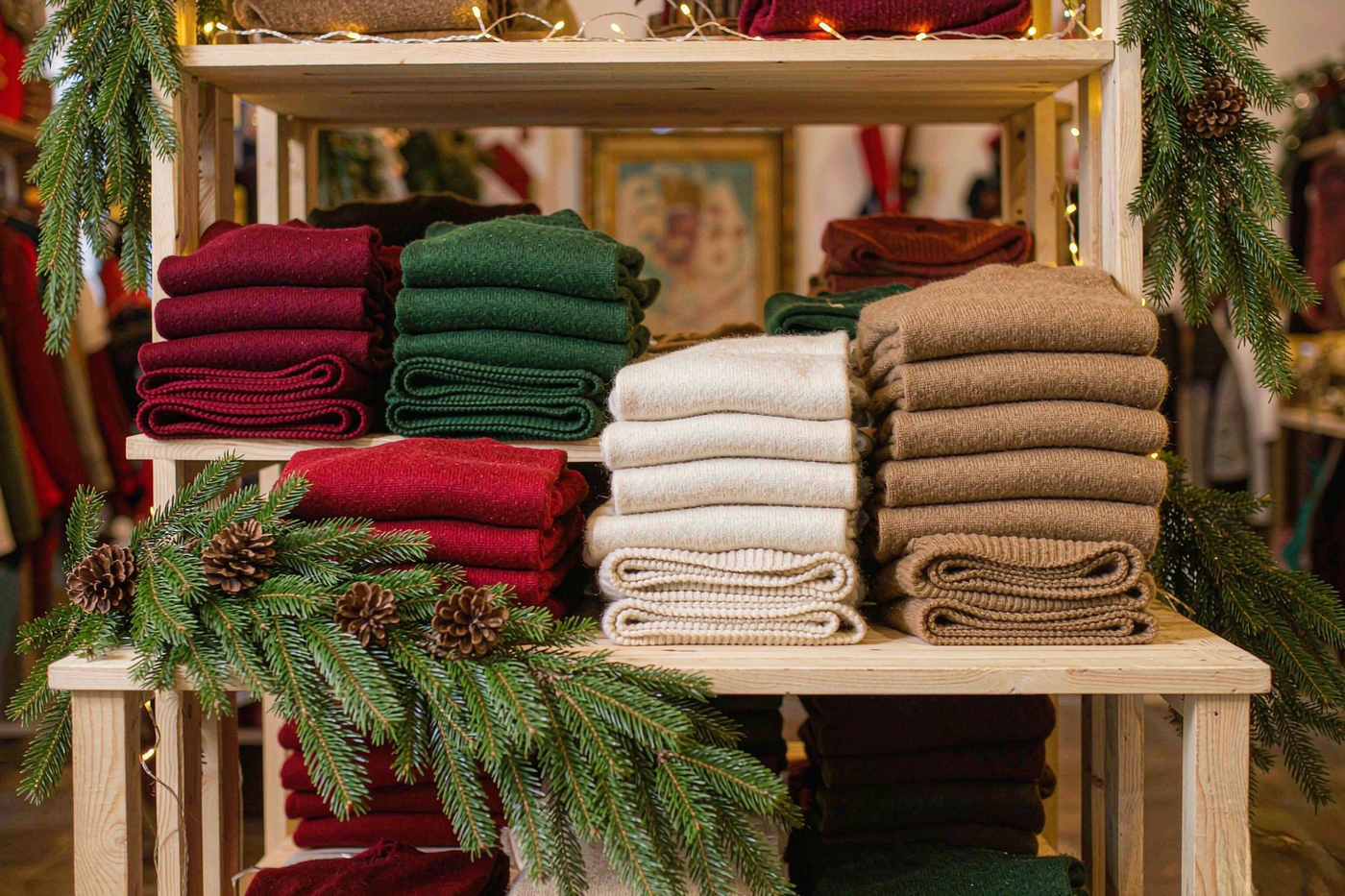
Colour first: festive palettes and minimum dye lots
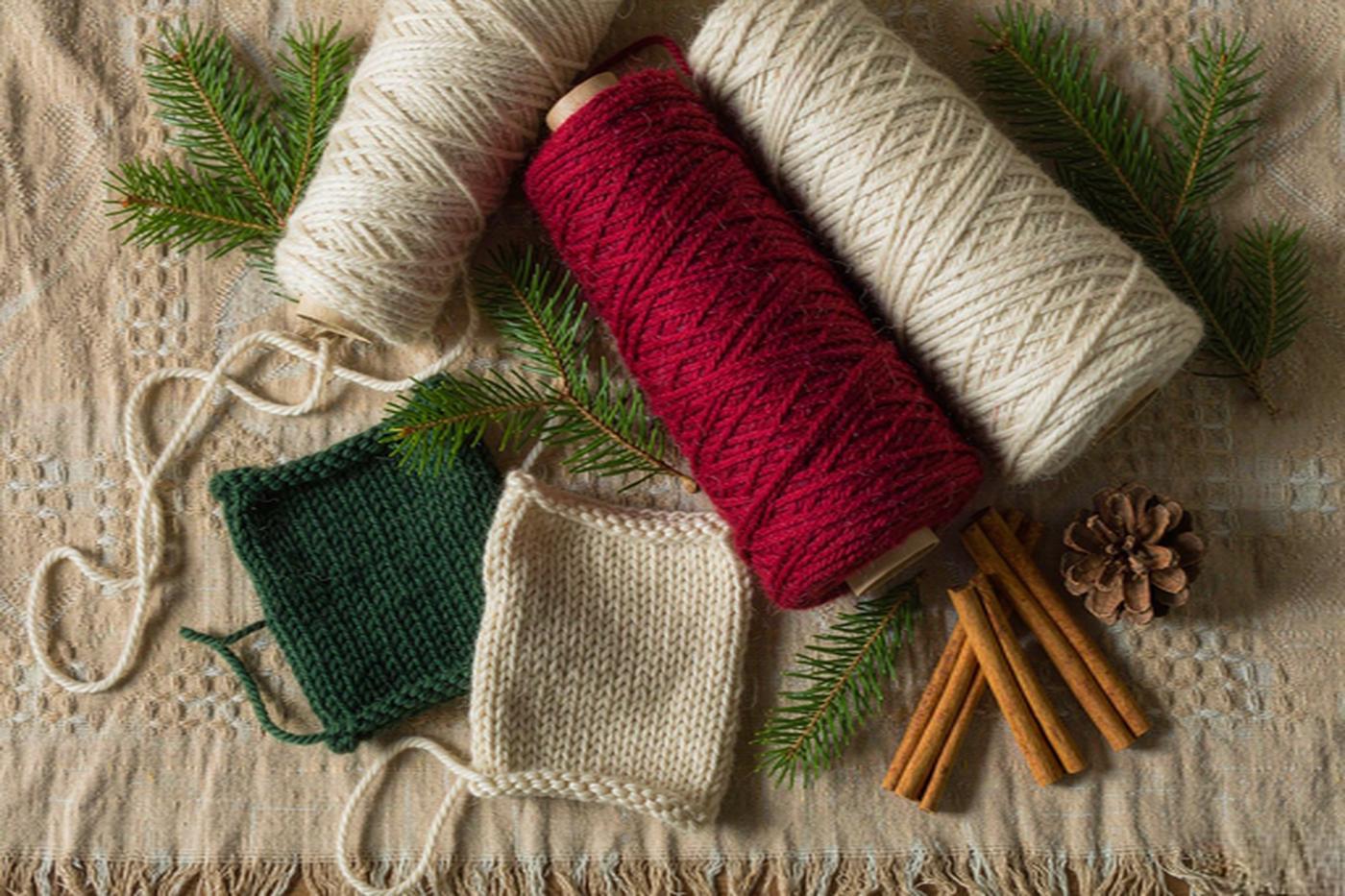
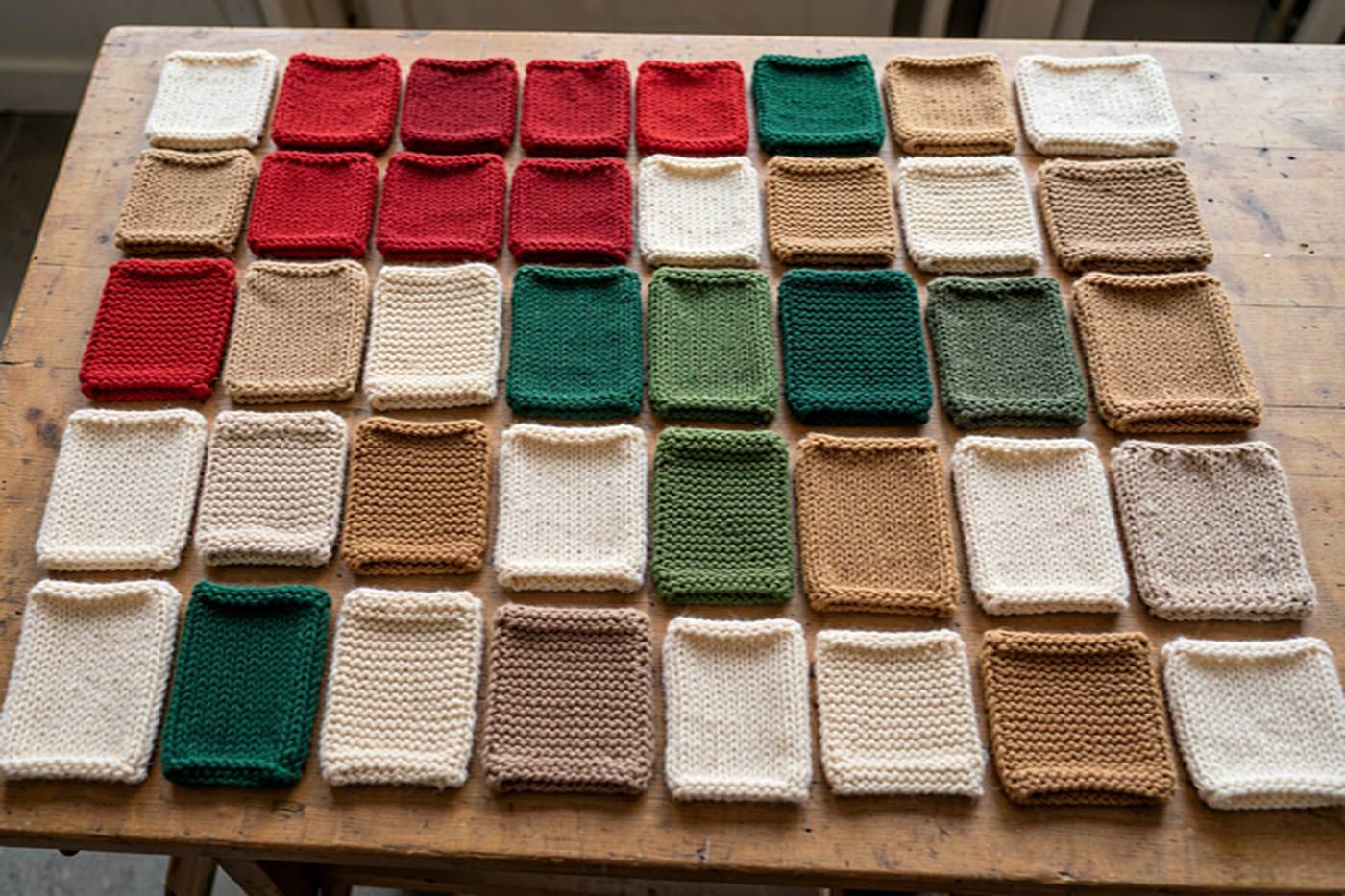
Jacquard, intarsia and embroidery: how the motifs get made
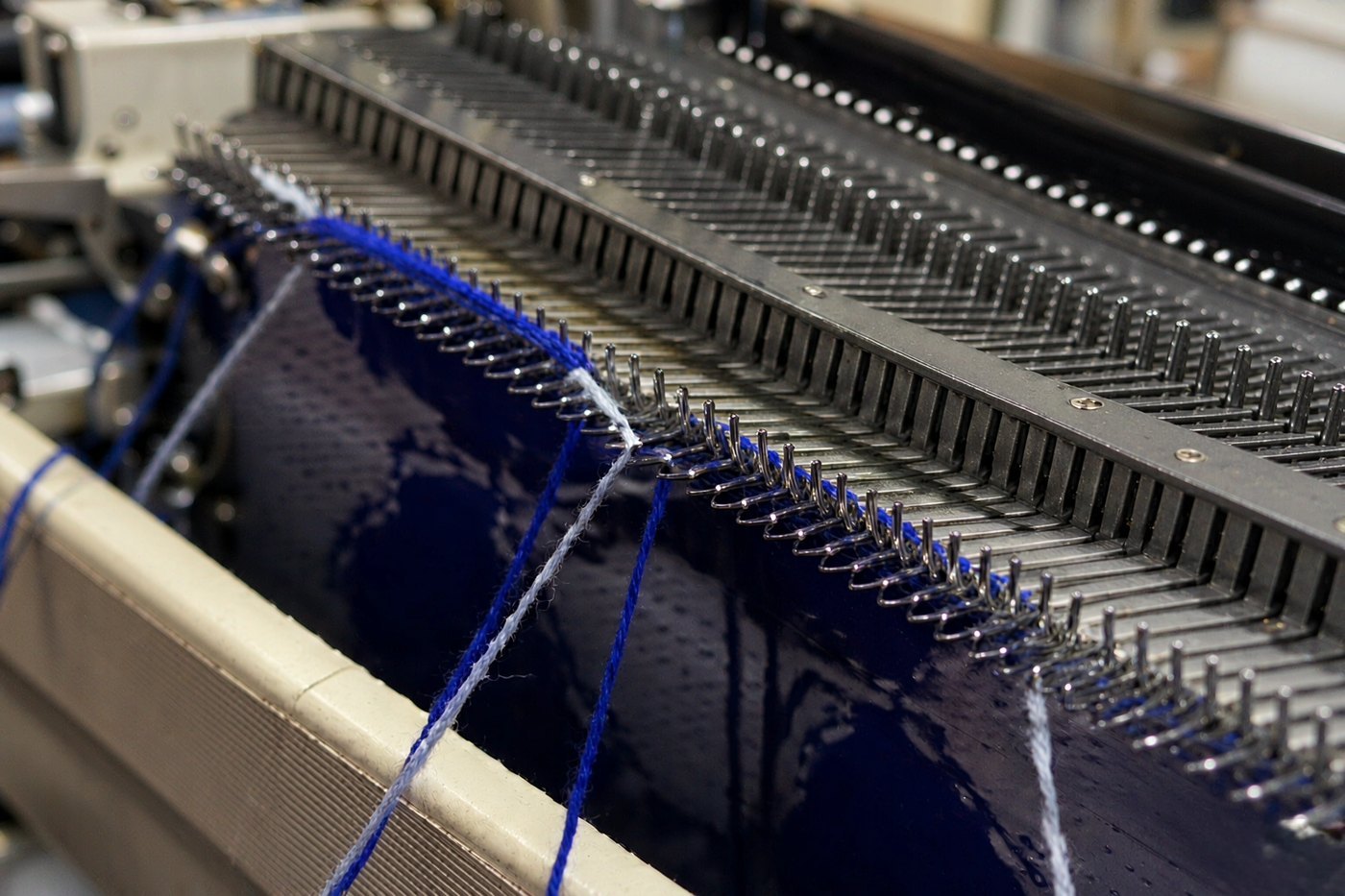
Embellishments and the novelty-knit risk list
Gifting packaging: boxes, tissue and hangtags
The countdown: working backwards from the shelf date
Cancellations, reorders and the January carry-over

FAQ
How early should a Christmas cashmere programme start?
What is the typical minimum for a festive colourway?
Can a Christmas motif be knitted into pure cashmere?
What should gift packaging include?
What happens to unsold festive stock in January?